About
Vetiver's backstory
Distilled from the aromatic roots of the vetiver botanical, vetiver oil has been used throughout history in the making of perfumes, soaps, cosmetics, and more. As early as the 12th century, the vetiver herb and the essential oil obtained from its roots have been used around the world for their soothing, protective, and uplifting properties. Vetiver’s popularity as a fragrance dates all the way back to the Middle Ages, when its deep and woody aroma came to be associated with masculine colognes. Today, it’s still a main ingredient in a large number of men’s fragrances!
While vetiver is native to India, the plant was introduced to Haiti in the 1940s, who became the largest exporter of vetiver oil – accounting for nearly 50% to 70% of the world’s supply. Vetiver is crucial to southwest Haiti’s economy, with an estimated 60.000 people relying on it as their main income source. Try putting 10 drops of Pure Vetiver in your bath water to ease tension and promote feelings of added relaxation.
Country of origin
Haiti
Aroma
Sweet, woody, and earthy
Plant parts used
Root
Extraction method
Steam distillation
Dilution
No dilution necessary, but dilute to make the resinous oil easier to apply on skin.
Safety
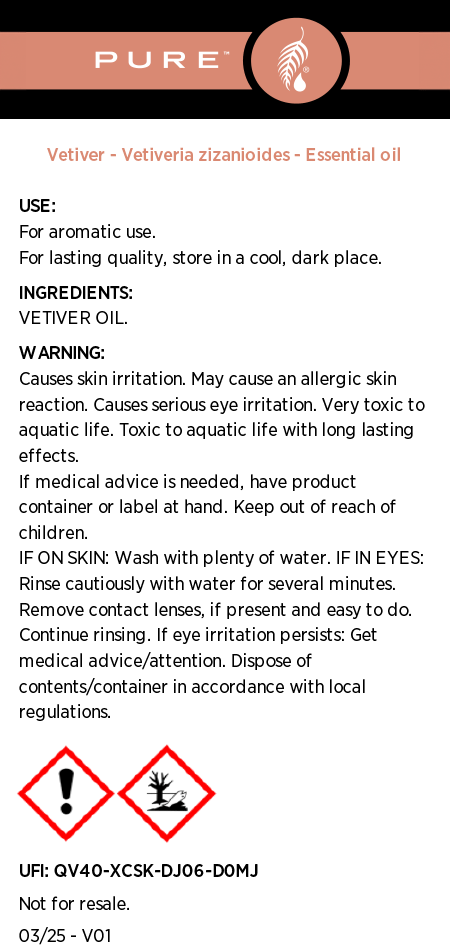
Apply this aromatic oil to inner wrist and behind the ears. Dilute with a carrier oil as needed for skin sensitivity. For lasting quality, store in a cool, dark place. If pregnant or nursing, consult your health-care practitioner before use. Avoid contact with eyes, inner ears, and sensitive skin. For external use only. Keep out of reach of children. Discontinue use if irritation occurs.
Usage ideas
Calm before bed: Add a few drops of Vetiver to a warm bath or your pillow during your nighttime routine.
Deep breaths: Rub 2-3 drops of Vetiver into your palms and inhale, letting your mind clear. Note: While there’s no need to dilute Vetiver, this is a very thick, resinous oil. Many people prefer to use it with a carrier oil to make application easier!
Ingredients